Wood
Forestry residues and wood waste are converted into biochar, pyrolysis gas and pyrolysis oil through controlled pyrolysis.
Pyrolysis is an advanced industrial technology that converts waste into valuable resources and clean energy. It enables industries to reduce waste, lower emissions and improve resource efficiency as part of the transition toward a more sustainable and circular economy.
Vow delivers continuous, precisely controlled pyrolysis systems that convert biomass, sewage sludge and end-of-life tires into biochar, biocarbon and bioenergy. Our technologies enable flexible feedstock handling and efficient energy recovery, allowing clean energy to replace fossil fuels in industrial operations.
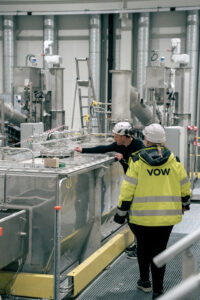
Pyrolysis is based on thermochemical conversion, where organic materials are heated without oxygen. Instead of combustion, the material undergoes controlled thermal decomposition and breaks down into three main outputs: biochar, pyrolysis gas and pyrolysis oil.
This heat-driven process captures the energy stored in waste while producing fewer pollutants than traditional incineration. As a result, pyrolysis offers higher energy efficiency and improved environmental performance compared to conventional waste treatment technologies.
Each output from the pyrolysis process plays a distinct role in waste-to-energy systems, material reuse and industrial applications.
Biochar is a stable and carbon-rich solid material with high porosity. It is used for long-term carbon storage, soil improvement, water filtration and construction materials. Biochar and biocarbon can also replace fossil coal in energy-intensive industries such as steelmaking, supporting industrial decarbonization.
Pyrolysis gas is an energy-rich gas that can be reused for on-site heat generation and electricity production. By substituting fossil fuels, pyrolysis gas improves overall process efficiency and reduces emissions.
Pyrolysis oil, also referred to as bio-oil, is a dark and viscous liquid that can be used for energy production or as a low-carbon additive in industrial processes. While raw pyrolysis oil is acidic and unstable for direct use as transport fuel, it can be upgraded through additional refining and catalytic processes to produce renewable fuels and chemicals.
Pyrolysis addresses two major global challenges: waste management and climate change. By converting organic and industrial waste into valuable products, the technology reduces landfill dependency and supports a circular economy where materials are kept in use.
A key advantage of pyrolysis is its ability to enable carbon recovery. Through carbonization, carbon is stored in biochar in a stable solid form, allowing long-term carbon sequestration. This makes pyrolysis an effective solution for both emission reduction and climate mitigation, supporting net-zero strategies across industries.
Beyond environmental benefits, pyrolysis creates clear industrial and economic value. Energy recovered from pyrolysis gas and pyrolysis oil can be integrated into industrial operations, while biochar and biocarbon open new application areas across agriculture, construction and heavy industry.
By combining waste treatment, energy recovery and material valorization, pyrolysis transforms waste from a disposal challenge into a valuable industrial resource.
Continuous pyrolysis plants enable efficient and scalable waste-to-energy solutions for modern industry. Unlike batch systems, continuous plants operate in a steady and automated flow, allowing feedstocks such as biomass, biosludge and end-of-life tires to be processed with high throughput and stable performance.
Through constant thermochemical conversion, waste is transformed into biochar, pyrolysis gas and pyrolysis oil with minimal emissions. Integrated energy recovery and robust process design ensure operational reliability, energy efficiency and commercial viability. Through end-to-end project delivery, including feasibility studies, engineering design and commissioning, pyrolysis can be implemented as a reliable and scalable part of industrial sustainability and net-zero strategies.
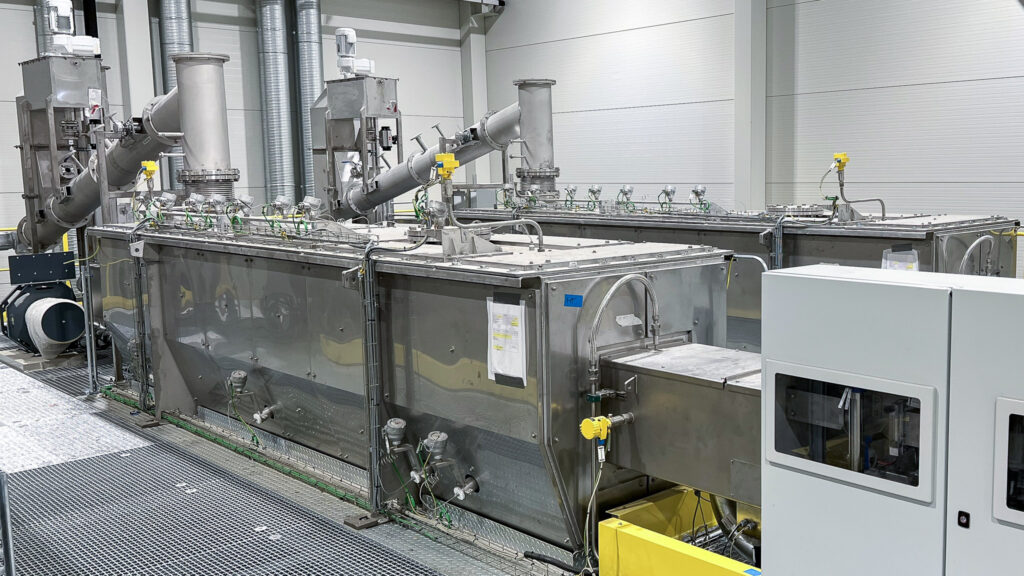
Pyrolysis can process a wide range of organic and industrial waste streams, enabling flexible and efficient resource recovery.
Forestry residues and wood waste are converted into biochar, pyrolysis gas and pyrolysis oil through controlled pyrolysis.
Agricultural residues such as straw and husks are transformed into renewable energy and carbon-rich biochar.
Sewage sludge and biosolids are treated safely, enabling energy recovery and reduction of harmful substances.
End-of-life tires are converted into recovered carbon black, pyrolysis oil and energy-rich gas.
Pyrolysis converts waste into valuable products that enable energy recovery, carbon storage and industrial reuse.
Biochar is a carbon-rich solid material used for long-term carbon storage, soil improvement and as a renewable carbon substitute in industrial applications.
Pyrolysis gas is an energy-rich gas that can be reused for on-site heat and power generation, reducing fossil fuel consumption.
Pyrolysis oil is a liquid energy carrier used for energy recovery or as a low-carbon additive in industrial processes.
Pyrolysis supports circular economy principles by converting waste into valuable energy and carbon-based products instead of disposing of it. Through controlled thermochemical conversion, materials are kept in use while emissions and landfill volumes are reduced.
By enabling carbon recovery in biochar and energy recovery through gas and oil, pyrolysis contributes to decarbonization and long-term climate mitigation across industrial value chains.
Pyrolysis enables emission reduction, carbon recovery and circular use of resources across industries.
Pyrolysis converts biomass into stable biochar, enabling long-term carbon storage and supporting carbon reduction strategies.
By transforming waste into energy and reusable materials, pyrolysis reduces landfill use and lowers emissions compared to conventional waste treatment.
Energy recovered from pyrolysis gas and oil can be integrated into industrial processes, improving overall energy efficiency.